by Hannah Packard
It’s impossible for us to see the entire scope of God’s work—how He makes things beautiful in His timing (see Eccles. 3:11). But there are moments when, after periods of extended and enduring obedience, we are able to see a harvest.
In the remote, lush green jungle of Papua, a province of Indonesia, God has been weaving a story such as this—one of persevering faith and His love for those without gospel access in the hardest part of our world. Many people groups living in Papua had no known contact with the outside world until 1945, when a U.S. military plane crashed into the Baliem Valley, a part of the central highlands of Papua.
Soon after, The Christian and Missionary Alliance began to send missionaries to these newly discovered people groups. Two of those Alliance international workers, Ed and Shirley Maxey, began their ministry in the Baliem Valley in the 1950s, embarking on a potentially dangerous and highly difficult endeavor of bringing the gospel to the Stone Age tribes of the region.
Growth Like Sweet Potatoes
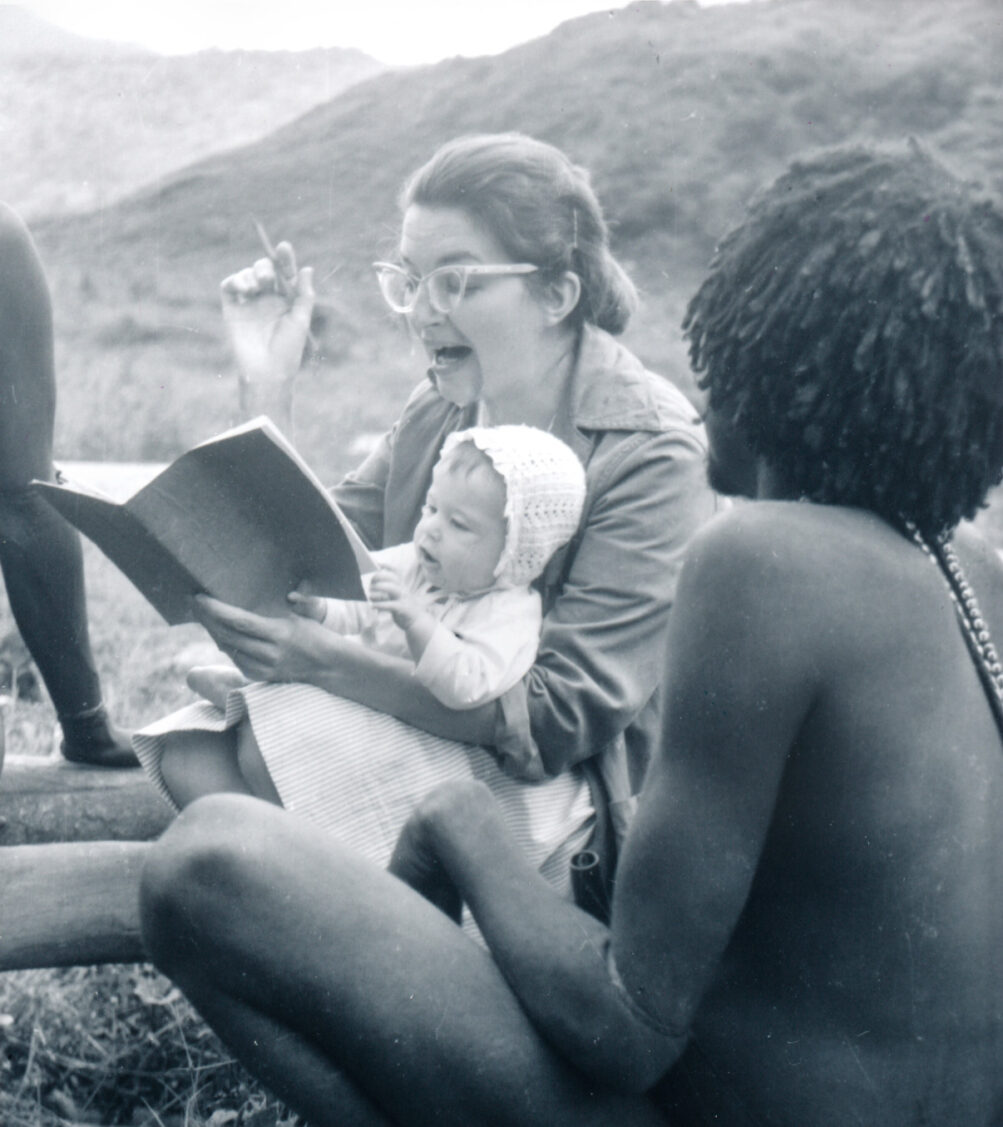
When Ed and Shirley initially settled in the valley, there was significant violent conflict in the area and a culture permeated by fear. As the Maxeys endeavored to learn the language of the local people, it was not a written one; they had to learn entirely by speaking with their neighbors. Instead of being discouraged, Shirley simply took her small son, Buzz, with her to the sweet potato fields, planting alongside the local women in order to learn.
Progress was most often very slow. The Maxeys’ presence was new and aroused suspicion in some of the tribespeople, but they were committed to holistic ministry. Many of their early days were spent removing arrows from people, treating spear wounds, and doing dental work. They brought in penicillin and medicines to treat sickness and sores, animals and fruit trees, and even taught the local people crafts like basket weaving. Their ultimate goal was always to share the gospel—which made learning the language, and creating writing and literacy materials, a foundational step for them to get the Word of God into these peoples’ hands.
By the time Ed and Shirley returned to the United States on their first home assignment, years after arriving in Papua, no one had yet turned to the Lord. This kind of waiting can be do discouraging—but God was at work in the ways they couldn’t yet see. Like the local peoples’ staple crop of sweet potatoes, growth was happening underground.
The Maxeys had been praying for one of the village chiefs to come to Christ, but the first breakthrough came in an unexpected way when a local boy showed up at their home wanting to pray. He became the first believer—a surprising and unforeseen harvest. In another village, it wasn’t until the Maxeys had been praying, witnessing, and working for 30 years that openness to the gospel finally came, with villagers sending word that they were ready to “receive the Jesus talk.”
In 1963, Ed traveled with another missionary over the southern Baliem mountains to make contact with a new tribe—the Ngalik people. As they finally came over the mountains and arrived in the village of Silimo, they were unaware that there were Ngalik warriors lying in wait surrounding the brush, ready to kill them. Ed, exhausted from the journey, laid down in the middle of the trail. Seeing this, the warriors were baffled and unsure about killing a man lying in the mud. So, they decided to spare the lives of the missionaries. Soon after, Ed and Shirley moved their young family up to Silimo, to live among the Ngalik people.

A Different Kind of Victory
Ed and Shirley had a great desire for the Ngalik to have a Bible in their heart language. But this isn’t a simple task in an unwritten language among a people without literacy. So, in tandem with Bible translation, the Maxeys had to accomplish this work.
They developed simple primers and taught people how to read—but every dialect they worked among needed its own literacy program. It was a complicated and difficult process, and the Maxey family was faithful in this task for decades. “As long as I can remember, my parents have been learning the language, teaching people how to read, and translating the Bible,” Buzz would later say.
In the 1970s, they were finally ready to begin the Bible translation work in earnest. Ed and Shirley enlisted two local young men, Amos and Enos, to help with the weighty task. This help was crucial because the work of Bible translation usually isn’t as simple as word-for-word equivalencies. In order for the Scriptures to be as meaningful as possible, theological ideas and images often need to be contextualized in a way that people can understand. For example, “Lord” may not have a contextual meaning in Ngalik, but “Chief” certainly does.
Amos, Enos, and Shirley faithfully worked on the New Testament translation, and portions of the Old Testament, nearly every day for 25 years. All the while, they greatly anticipated the moment they would be able to get the Scriptures into people’s hands.
In 1990, Ed and Shirley had been laboring in Indonesia for decades, and their son Buzz and his wife, Myrna, were beginning their first term serving as Alliance international workers with them in Indonesia. At that point, an entire network of churches had been established among the Ngalik—a harvest of joy and fulfilled prayers.
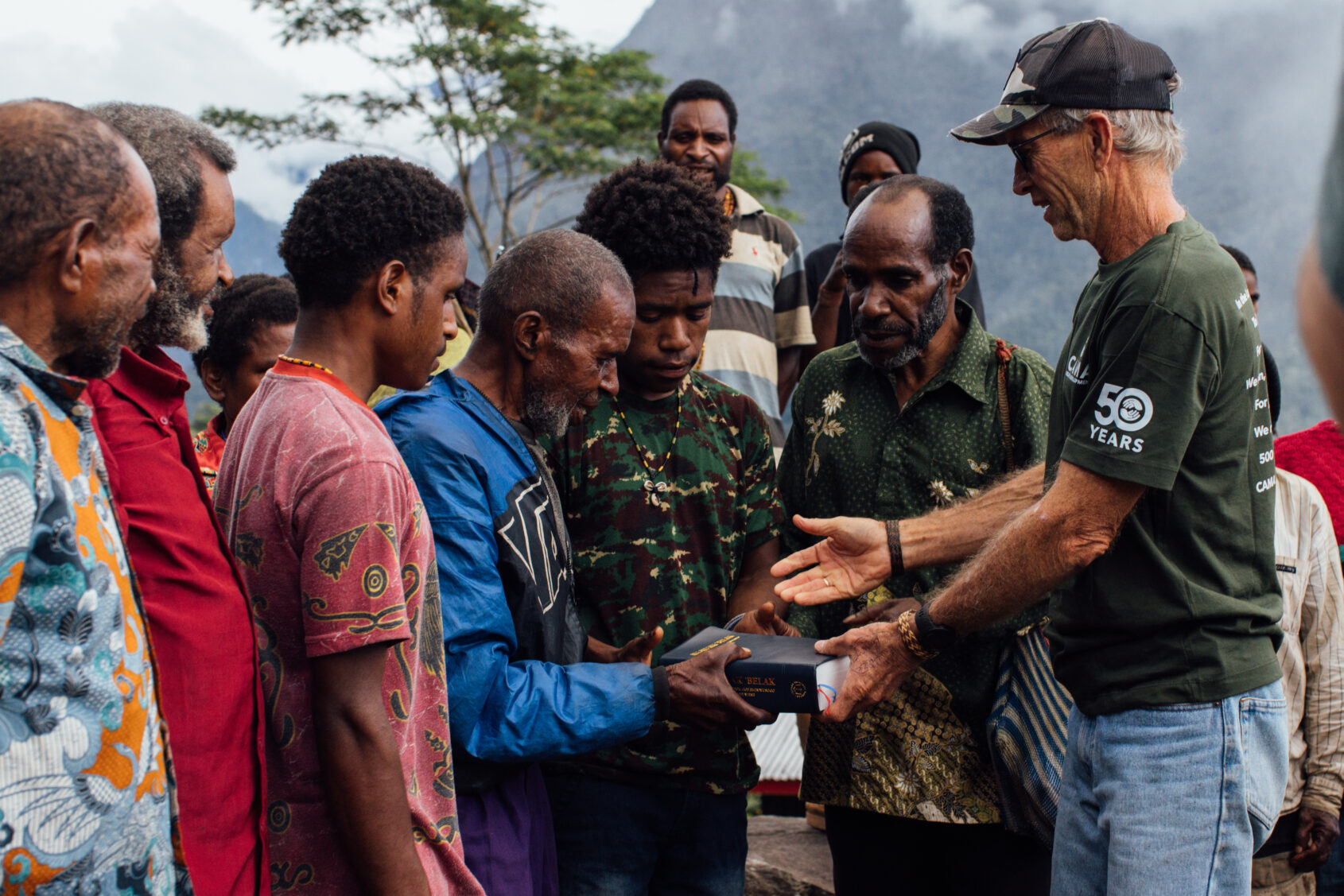
None of the Maxeys would forget the day they finally had the New Testament completed and held a dedication service to honor the occasion. Standing before everyone, Shirley said, “I don’t have gold to give you, and I don’t have silver—but I want to give you something much more valuable.” Then everyone gathered received a copy of the New Testament in Ngalik.
“We had a dance to celebrate,” Buzz shared. “On the old dance ground where they used to dance to celebrate killing their enemies, we danced celebrating a different kind of victory.”
The Fruit of Decades
Ed and Shirley retired in the mid-90s after spending nearly 40 years serving in Indonesia. Though they had immense satisfaction in their work, as Shirley neared the end of her life in 2010, she shared with Buzz and Myrna that she had one regret—not being able to finish the full Ngalik Bible. She asked if they would talk to the Ngalik church leaders about continuing the project.
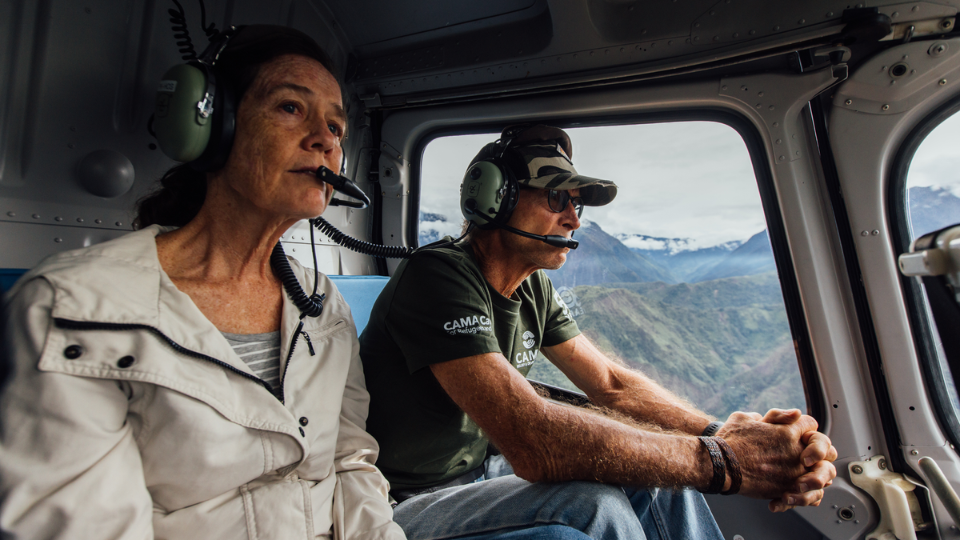
While Ed and Shirley had laid a tremendous foundation, the rest of the Old Testament still needed to be translated into Ngalik. So, Buzz and Myrna, well established as Alliance workers in Papua doing development and relief work for over two decades themselves, took up the baton. After church leaders agreed to completing the project in 2011, Buzz and Myrna sought out Amos and Enos, hoping that they would be willing to use the invaluable experience to complete the entire Bible translation into Ngalik. Amos and Enos, now church leaders among the Ngalik, gladly agreed to help with the translation.
The work was never easy, requiring Amos and Enos to sometime spend weeks away from their families to work with the translation team, which included Buzz and Myrna. For the first eight years, after much difficult work, Amos and Enos’ handwritten translations of the Old Testament were transported out of the Papuan jungle to where they could reach their next destination—Canada. A small team of people from RockPointe Church, and Alliance Canada church in Calgary, met weekly to type out each verse and digitize the manuscripts. Then, they were printed out and taken back to Amos and Enos for corrections. This entire process was repeated three times.
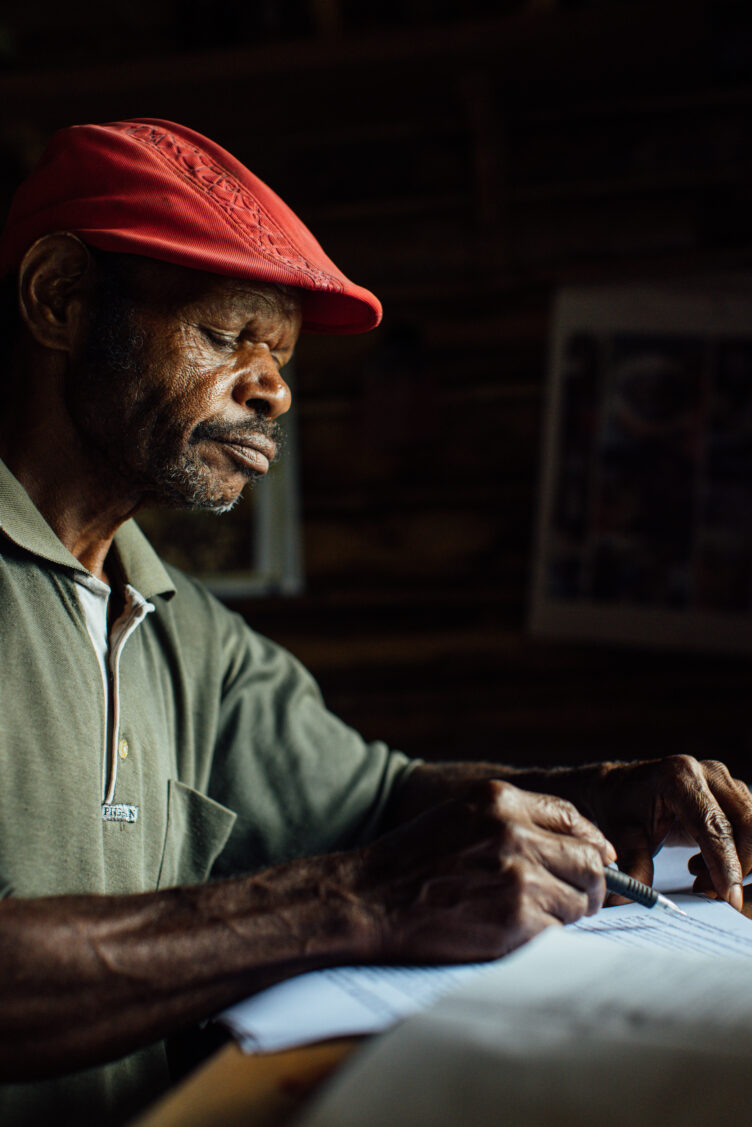
Then the difficult process of reading, editing, and correcting the translation began. With the help of an Indonesian consultant, a Wycliffe Bible consultant, the Indonesian Bible Society, Amos and Enos, and a group of other Ngalik men and women, several rounds of editing and proofreading were completed. During the entirety of the process, while not working on the translation, Buzz and Myrna were doing their own holistic ministry in AIDS awareness, a youth soccer team, animal husbandry, sustainable farming, and disaster relief through their work with CAMA Services.
After decades of work, difficulties, and perseverance, finally, at the end of 2023, the Ngalik Bible—Old and New Testament—was finished and printed. “What kept me going,” Buzz says, “was knowing that it was God’s Word, and I had the opportunity to participate in a historical moment—to provide God’s Word in the heart language of the Ngalik people.”
“It was so much work,” Myrna says through tears. “Especially Amos and Enos, who sacrificed a lot—they were away from their homes a lot—but it was worth every day.”
As Indonesians from other more crowded areas of the country are currently being resettled in Papua through government initiatives and sponsorships, there is hope that God’s Word—now in their own heart language—will burn brightly among the Ngalik believers, leading them to sow the seeds of the gospel among their new neighbors.
An Eternal Harvest
Shirley, who went to be with Jesus in 2010, and Ed, who joined her in 2022, never got to hold the full Ngalik Bible in their hands. They never got to see what they and others had worked to hard toward fully realized. And yet, as Ed had said before, none of their work was too much to give to see God exalted among a previously unreached people group. Because of their labor, people like Buzz and Myrna—and Enos and Amos—were able to carry on the work, more thriving local churches were established, and even more people without gospel access were reached.
Three generations of the Maxey family have served or are currently serving with The Alliance in Indonesia. Buzz and Myrna serve with CAMA Services along with their son and his wife. Buzz’s brother, Chris,* and his wife, Melissa,* serve with aXcess along with their son and daughter-in-law. Each of their ministries—which are all holistic, creative, and varied—continue to expand with time. Buzz and Myrna, as well as Chris and Melissa, have all recently found God calling them to extend their work to new regions or among new people groups who so desperately need gospel access. “We feel like God has given us a second wind, an excitement, a joy,” Myrna says. What a legacy of faithfulness to the long journey of obedience in following God. And what a joy to see what God continues to do as the Maxeys go on steadfastly pioneering His work.
In archival video footage, when reflecting on the nature of waiting on God to bring about a harvest, Ed and Shirley both agreed that if they had a life to live over again, they wouldn’t have changed a thing. They would have done the same work and served the same peoples.
Specifically remembering the village where it took 30 years for there to be openness to the gospel, Ed shared, “Sometimes it takes a long time before the seed germinates. And yet, 30 years is not too much to give and too long to work.”
“When the harvest is reaped, it’s for eternity,” Shirley added.
*Names changed
Subscribe to Alliance Life Magazine
As an Alliance church member, you can join the 142-year legacy of Alliance Life and get exclusive stories and articles delivered directly to your mailbox or inbox. Click here to request your free subscription!