November 27, 2024
At Our Front Door
Addressing the needs of marginalized peoples in Spain
by John Bils
As we approach a neighborhood with narrow streets, terracotta roofs, and graffiti-covered walls, my host, Carlos,* welcomes me to the ghetto. Outside my car window, something like a giant concrete trough runs along the street. Its walls are also covered with graffiti. Carlos explains that I’m looking at the drainage system. The trough bed is dry now, but over 50 years ago, many died in this neighborhood because of flooding. The rainwater flowed from the mountains and filled the streets in the valley. Within three hours, the area was covered with over 200 liters of water per square meter. The drainage system keeps that from happening again.
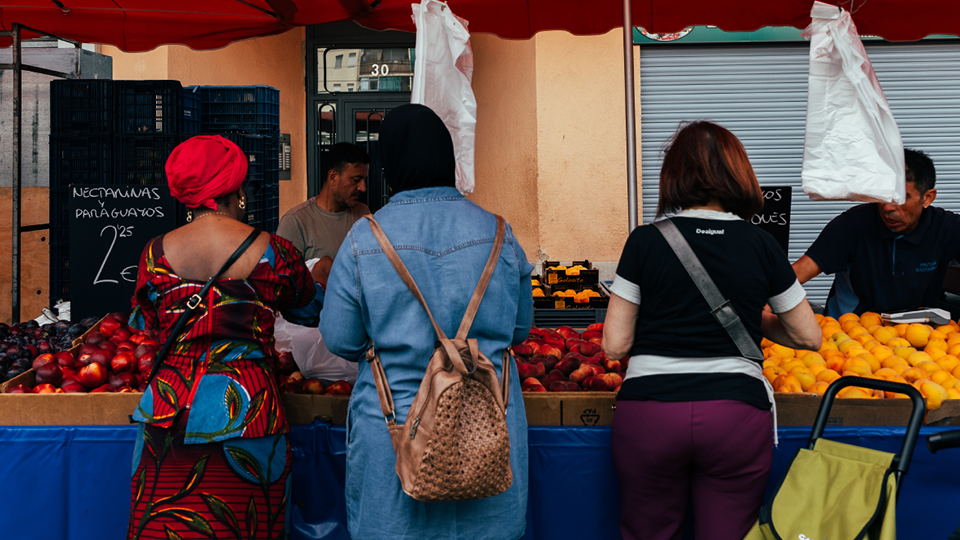
As I saw firsthand during my visit this summer to northern Spain, this struggling yet resilient neighborhood is experiencing a different crisis today: a flood of immigration. The new arrivals come from many places, but mainly North Africa. Many are asylum seekers, and they are settling in a traditionally blue-collar region of the country.
For many African immigrants, the local economy functions like a drainage system, channeling them into low-income neighborhoods like this one where, for most locals, they remain unnoticed and easy to avoid. With limited opportunities for work, housing, education, and networking, many settle for jobs in construction or food service. Wages are typically lower for immigrants than for Spanish citizens. Some are lured into signing an employment contract, paying a fee just for the opportunity to work. When landlords rent to tenants without an employment contract, they charge higher rent. Sometimes eight or more immigrants may end up living under one roof, each paying about a quarter of their monthly earnings for a cramped apartment.
Ongoing Movement
Since Carlos and his wife, Sandra, arrived in Spain over three years ago, God has attuned their hearts to the needs of their marginalized and often exploited neighbors, especially their need for the gospel. They, and other Alliance workers in the region, recognize the flood of African immigrants into Spain as a blessing, an opportunity to gain access to communities that have been closed off to Christians for generations. They have imbedded themselves in the drainage system with the hope that gospel seeds may someday take root there. In the late 1800s, The Alliance was founded as “an aggressive spiritual movement” to evangelize, care for, and disciple working class immigrants in New York City. Today, this movement continues in a radically different setting.
Carlos and Sandra find many avenues to connect with and meet the practical needs of their neighbors. They are involved with adult education classes and, to a lesser degree, an after-school program. In his efforts to help one North African man get acclimated to his new home, Carlos has even found himself giving driving lessons and assembling IKEA furniture. Their time together opens doors for deeper conversations about their spiritual views.
Carlos’ friend admits to being only nominally attached to the majority religion of his home country and has asked questions that reveal both his misconceptions about Christianity and his openness to learn. Carlos helps him work through these misconceptions, encouraging him to understand Christian teachings through the Bible and not through Spanish cultural norms or depictions in the media. He has also introduced him to the Book of Romans and the notion that our obedience to God’s Word is not prompted by fear but by love for our Creator. These informal talks in his car and living room are probably the closest the man has ever come to participating in a Bible study.
Welcoming the Stranger
Carlos and Sandra are not the only Alliance international workers in northern Spain who carry on The Alliance’s legacy for serving immigrants, the poor, and other outcasts even when the calling is inconvenient, unpopular, or costly. After spending an evening with Carlos and Sandra, I visit another city about an hour away, where Brian, the leader of a small Alliance team, shows me around on an afternoon when the sunlight feels like hot coals on our skin. Many of the lower-level windows in his neighborhood have been cemented over. The practice is intended to prevent squatting, which many immigrants resort to once they have been denied affordable housing.
While others in the community react to immigrants with disdain, annoyance, or fear, Brian and his team go out of their way to demonstrate to newcomers that they are worthy of dignity, kindness, and hospitality. They don’t condone or encourage illegal practices like squatting, but they frequently welcome young immigrants into their apartment for meals and Bible study and direct them to assistance programs and other resources that keep them on track to becoming Spanish citizens. He and his team are driven by the understanding that they are advancing the Great Commission—one meal, one conversation at a time—and that the opportunities open to them in Spain aren’t available in many other places.
“Unreached peoples are at our front door,” Brian says as we continue our walk through the neighborhood, crisscrossing the sidewalks for patches of shade we find under trees and awnings. Most prefer to spend the scorching afternoons inside, but even at this hour, we encounter one of the many friends Brian has made since arriving in Spain four years ago. He is a towering man in a traditional African robe. As we stop to chat, he smiles proudly, insisting we visit his new home. We can’t turn him down. He eagerly shows us into an upstairs apartment with a flatscreen TV, a few pieces of cheap furniture, and a woman’s photo on the wall—his wife, I believe, though she’s nowhere to be found. I wonder whether he had to leave his family behind in Africa. I can’t bring myself to ask, though.
After our brief visit, Brian tells me the man works in sanitation and earns a decent wage. If he had applied to rent the apartment, though, he probably would have been turned down. For him, the only viable path to permanent housing was to buy the apartment with cash. Saving up for the purchase took him years.
The Empty Storefront
Brian eventually brings me to an empty storefront with plate glass windows under tile signage with ornate lettering (which I assume to be Arabic). This used to be a perfume shop, but in the next crucial phase of building meaningful, impactful gospel presence among the local refugee community, he and his team are transforming the space into a community center for refugee youth to study English, exercise, and—because cycling is extremely popular in the region—get their bikes repaired. The community center will be the only gathering place of its kind in the neighborhood. The renovation project is so urgent and of such high strategic importance to advancing the Great Commission among displaced people that it has been featured in the 2024–25 Alliance Gift Catalog (cmalliance.org/giftcatalog).
Over the last four years, Brian has worked tirelessly to establish credibility with believers and nonbelievers alike who share his vision and passion for guiding children of refugees out of systemic poverty. Earlier on our walk, he admitted that he is often overwhelmed by the volume of emails he receives from local social workers, government officials, and others seeking his help with the refugee crisis facing their community.
“Sometimes I feel like I’m drowning in what God is doing,” he says. Yet, as he explains his vision for the community center, his energy, enthusiasm, and hope seem inexhaustible.
Like the African immigrants Carlos and Sandra meet in their community, most in Brian’s neighborhood don’t come to Spain hoping to encounter people of other faiths or to leave the religious traditions they grew up with. They are seeking security and job opportunities they couldn’t find in their home countries. The abandoned perfume shop is a harsh reminder that the dreams of many African immigrants are never realized. In the aftermath of frustrated human plans, though, God’s love and greater purposes prevail.
*All names changed
Subscribe to Alliance Life Magazine
As an Alliance church member, you can join the 142-year legacy of Alliance Life and get exclusive stories and articles delivered directly to your mailbox or inbox. Click here to request your free subscription!